Language policy in Kazakhstan has long gone beyond cultural discussion and has become a factor directly influencing business strategies. A new DEMOSCOPE "The effectiveness of language policy and the development of the Kazakh language" research captures an important trend: society perceives the "language issue" differently, and it is this difference that is becoming critically important for communication.
Sociologists have recorded that "one in three (33.8%) supports linguistic diversity while preserving the equal rights of all language groups, almost one third (30.8%) are in favor of the active development of Kazakh, while maintaining the roles of Russian and English. And 29.5% are for the priority development and promotion of the Kazakh language."
Sociologists have recorded that "one in three (33.8%) supports linguistic diversity while preserving the equal rights of all language groups, almost one third (30.8%) are in favor of the active development of Kazakh, while maintaining the roles of Russian and English. And 29.5% are for the priority development and promotion of the Kazakh language."
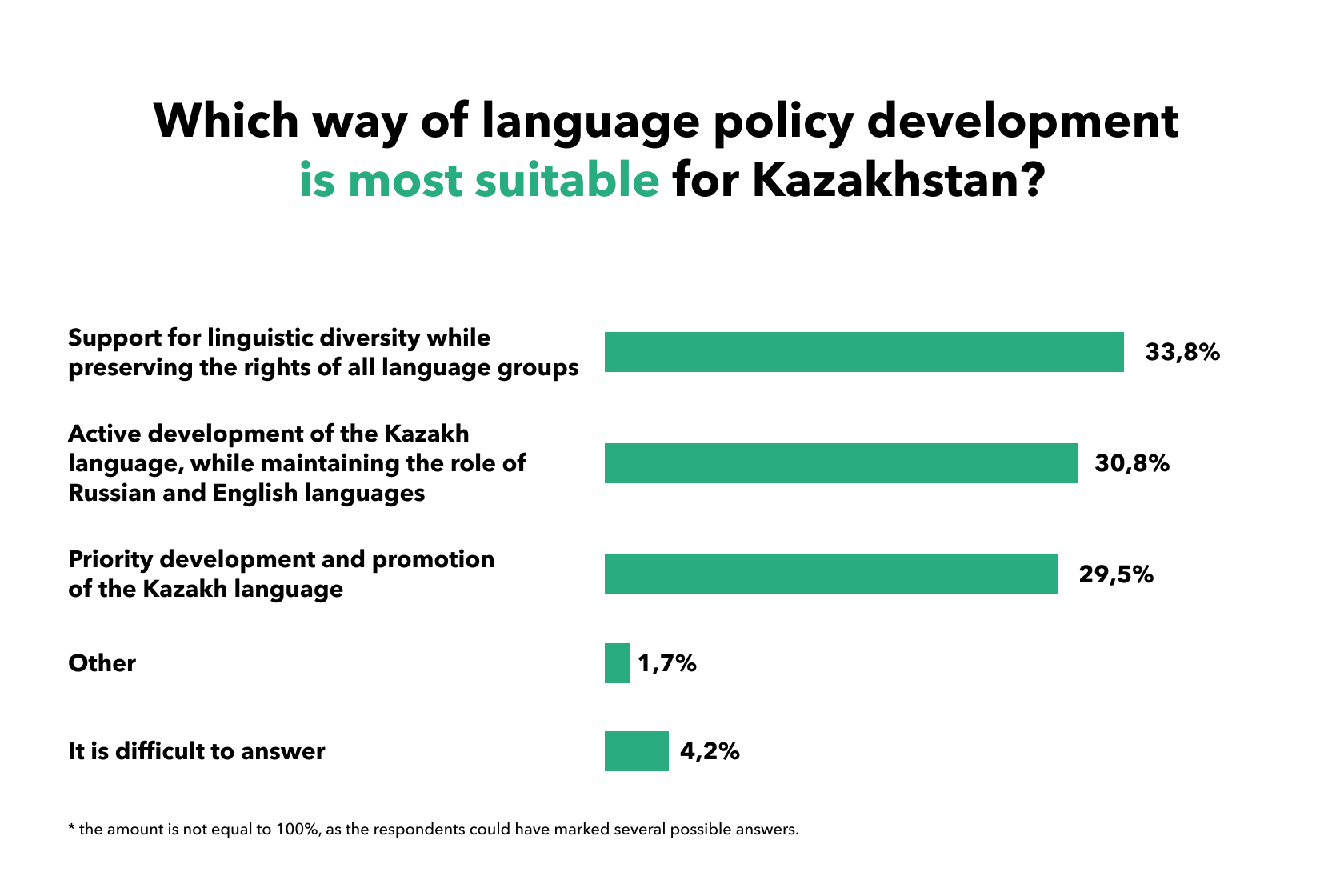
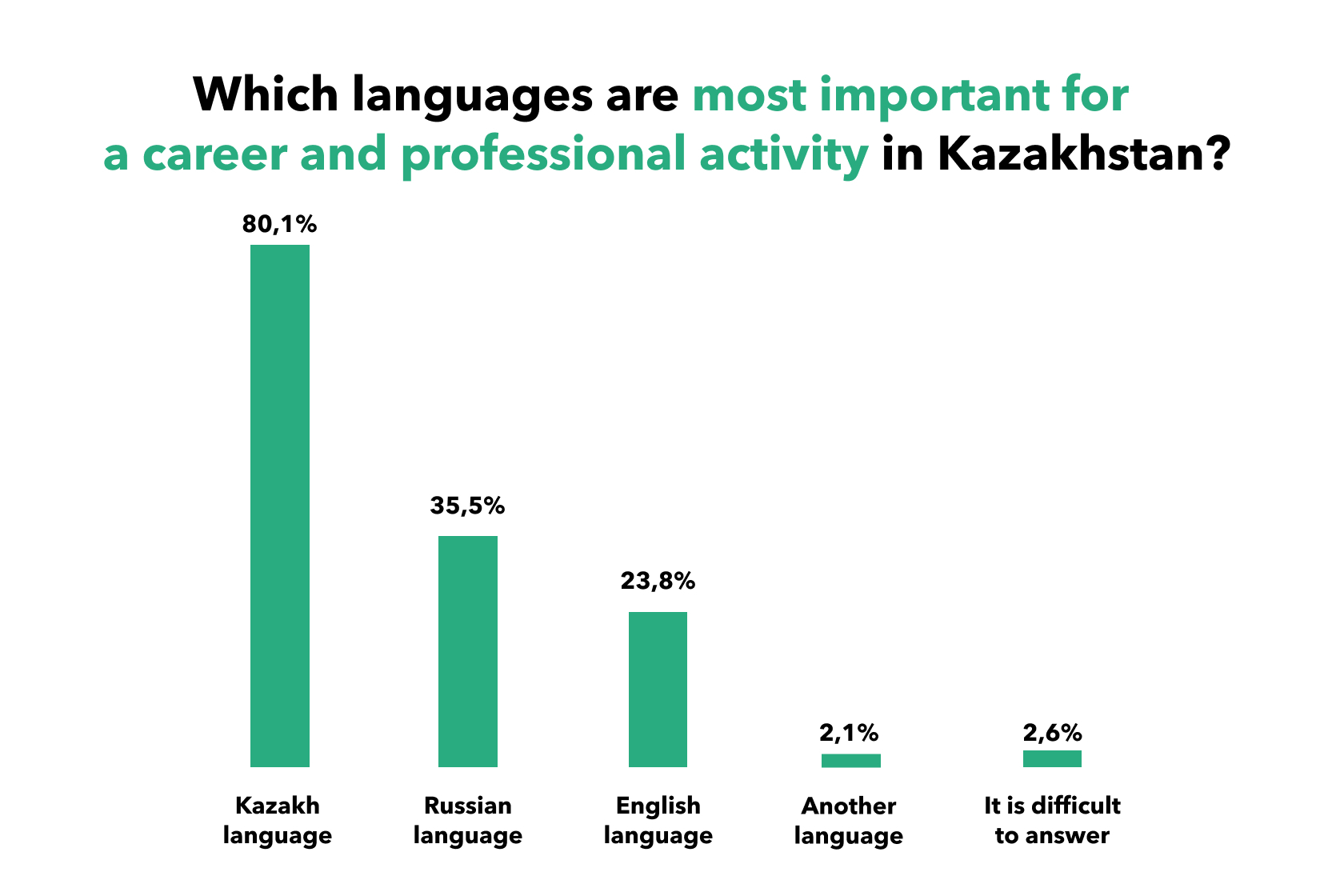
Such conclusions signal the importance of a communication model that preserves the interests of all language groups, respects diversity, and recognizes the special status of the Kazakh language. In addition, the Kazakh language is perceived by citizens as an instrument of success. The overwhelming majority of citizens (80.1%) noted his need to build a career.
However, the language policy is not as smooth as it might seem at first glance. The authors of the research note that almost half of the respondents (47.2%) consider the existing strategy to be very effective, while another 18.2% consider it rather effective. At the same time, 28.5% of Kazakhstanis rate the current policy on the development of the state language as ineffective: 4.5% of them call it completely ineffective, and 24% - insufficiently effective. This is a very important signal to communicators: there is a significant proportion of a skeptical audience in society, whose expectations must be taken into account.
Interestingly, "the greatest dissatisfaction with the effectiveness of the Kazakh language development policy was noted among Russian-speaking respondents (33.6%). 24.1% of those who speak both Kazakh and Russian are dissatisfied with the quality of the development of the state language. The lowest level of discontent can be traced among Kazakh–speaking respondents - 19.4%."
The survey participants say there is a shortage of qualified teachers (26.4%), low motivation of the population (23.9%), a shortage of educational literature and language centers (21.5%). "Russian-speakers and bilinguals are more likely to talk about staff shortages (34.1% and 32.4%), Kazakh-speakers about Kazakhstan's involvement in the Russian information space (19.4%)," and here we see a particularly striking disparity in the assessments of one issue. For some, the problem is the quality of teaching, for others it is media influence: the motives in perceiving the topic of language are different.
Interestingly, "the greatest dissatisfaction with the effectiveness of the Kazakh language development policy was noted among Russian-speaking respondents (33.6%). 24.1% of those who speak both Kazakh and Russian are dissatisfied with the quality of the development of the state language. The lowest level of discontent can be traced among Kazakh–speaking respondents - 19.4%."
The survey participants say there is a shortage of qualified teachers (26.4%), low motivation of the population (23.9%), a shortage of educational literature and language centers (21.5%). "Russian-speakers and bilinguals are more likely to talk about staff shortages (34.1% and 32.4%), Kazakh-speakers about Kazakhstan's involvement in the Russian information space (19.4%)," and here we see a particularly striking disparity in the assessments of one issue. For some, the problem is the quality of teaching, for others it is media influence: the motives in perceiving the topic of language are different.
"The majority of respondents (37.7%) believe that the highest quality education is provided in Kazakh language. One fifth (23.3%) of responders believe that the highest quality education is provided in Russian. At the same time, 53.5% of Kazakh speakers are confident in the advantage of Kazakh schools, and 45.3% of Russian speakers believe that the best quality is in Russian language."
And this is another point of tension. Any statement like "the best education or the best content is in such and such a language" will automatically divide society. It is safer for companies and media to emphasize the importance of education and content in all languages.
DEMOSCOPE research data outlines discrepancies in assessments of language policy and the language issue in Kazakhstan. Some see the Kazakh language as a career resource, others as an essential element of identity, and others tend to discuss the quality of education. But despite all the differences, one thing is obvious: the Kazakh language is perceived by citizens as the main social and professional capital, and 80% of citizens recognized the need of Kazakh language for a career.
Businesses should maintain a balance in their communications with representatives of all language segments of the audience. The one who will be able to integrate the Kazakh language into the narrative of his value range will receive the main thing - trust.
Anar Bekbassova
Infographics: demos.kz
And this is another point of tension. Any statement like "the best education or the best content is in such and such a language" will automatically divide society. It is safer for companies and media to emphasize the importance of education and content in all languages.
DEMOSCOPE research data outlines discrepancies in assessments of language policy and the language issue in Kazakhstan. Some see the Kazakh language as a career resource, others as an essential element of identity, and others tend to discuss the quality of education. But despite all the differences, one thing is obvious: the Kazakh language is perceived by citizens as the main social and professional capital, and 80% of citizens recognized the need of Kazakh language for a career.
Businesses should maintain a balance in their communications with representatives of all language segments of the audience. The one who will be able to integrate the Kazakh language into the narrative of his value range will receive the main thing - trust.
Anar Bekbassova
Infographics: demos.kz