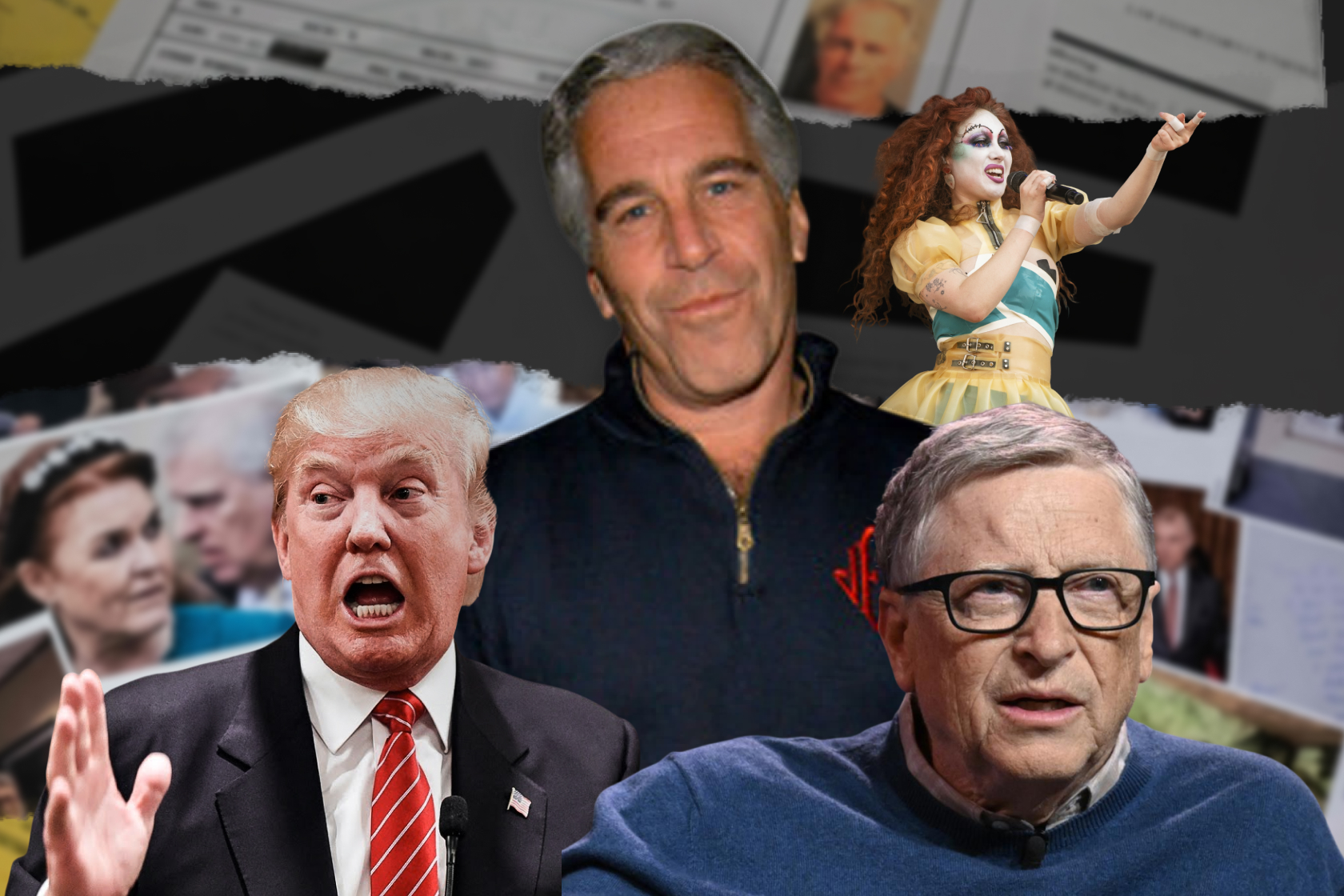
The publication of massive amounts of documents on the Jeffrey Epstein case has rattled the nerves of wealthy celebrities around the world. The archive of millions of pages has created serious public pressure. I wonder how celebrities behaved, from billionaires to members of royal families?
Controlled distance and silencing tactic
Some of the defendants in the scandalous correspondence chose the tactic of acknowledging the fact of their acquaintance with Epstein while categorically denying any involvement in crimes. The strategy of so-called controlled distancing was used, for example, by Bill Gates: he publicly confirmed that he had met with Epstein, called it a mistake and stressed that he did not know about his criminal activities. The model chosen by Gates not only distances him from the "wall of shame", but also reduces the risk of interest in exposure in the future, since contact is not denied. At the same time, Gates clearly delineates the moral and legal boundary - by intercepting the narrative, he skillfully translates it from the plane of suspicion of crimes to the plane of honest recognition of acquaintance, which in itself is not a crime.
A similar model of managing the reaction to negativity can be observed in the message of representatives of the British establishment. Prince William and Kate Middleton, making a statement through an official representative, expressed concern and focused the public's attention on supporting the victims of the scandalous case and the importance of transparency. There was not even a hint of an attempt to justify themselves in their communication. The royal couple only shifted the focus of their audience from a personal connection to a value position. Using an official representative (rather than personal accounts) added formality and weight.
In the business environment, reactions turned out to be more pragmatic and cautious. Large entrepreneurs and top managers have mostly chosen a minimal statement formula: acknowledge the acquaintance if it is documented, and refuse to comment further. This approach is related to understanding the specifics of the media cycle: any additional detail can become an independent information guide. The reputational strategy here is based around reducing the amplitude of the scandal — the less emotional reaction and details, the faster the agenda shifts to the next event.
Audience expectations are more expensive than money
A separate layer is the entertainment industry. Here, the behavior turned out to be more demonstrative. Some artists and public figures chose not just to distance themselves, but to sever business relationships with agencies or partners whose managers were mentioned in the documents.
An illustrative case was the situation around singer Chappell Roan, who announced the severance of cooperation with the Wasserman agency after emails from the agency's founder, Casey Wasserman, were discovered in declassified documents from the US Department of Justice. At the same time, Wasserman himself was not charged, and the correspondence dated back to a period long before the public disclosure of crimes. Nevertheless, the reaction was instantaneous: following Roan, Beach Bunny, Wednesday and other artists, as well as some of the agents, announced their intention to leave the agency. In her appeal, Roan emphasized that artists deserve representation consistent with their values, and that she "refuses to passively observe." This is a typical example of a strategy focused on the moral expectations of the audience. Even an indirect association with a bad story becomes a sufficient reason for public distancing, since in the eyes of the audience, silence may look like agreement with the revealed value series.
Counterattack tactics
Interestingly, almost none of the celebrities took the path of aggressive legal counterattack, and rightly so. The trial returns the topic to the information field over and over again, and requires an extremely high standard of proof of malicious intent and retention of public attention. It is not a fact that it will be possible to win the court with such reputational pressure.
But the current president of the United States, Donald Trump, is not one of the timid ten. He relied not only on denial, but also on excluding the topic of Epstein's documents from the agenda. Insisting on his complete innocence and referring to "millions of pages of documents" in which "nothing was found," Trump tried to finalize the issue being discussed in society and called for "a return to governing the country." This technique helps to reduce the toxicity of the topic and regain control of public attention. However, even in the absence of legal claims, a counterattack and a shift in focus leaves a moral and ethical risk zone - a public association with a case can persist longer than a political agenda, no matter how relevant it may be.
What Epstein's archives revealed
Millions of pages on the Epstein case did not become the reason for millions of criminal cases, but turned into millions of potential reputational crises. A mention in a story with a whiff is not equal to guilt, but it is almost always equal to the need for an explanation, because the risk of crisis is created by association with negativity, the context of the event. So, one way or another, everyone has to manage the perception of the disseminated information.
Controlled distance and silencing tactic
Some of the defendants in the scandalous correspondence chose the tactic of acknowledging the fact of their acquaintance with Epstein while categorically denying any involvement in crimes. The strategy of so-called controlled distancing was used, for example, by Bill Gates: he publicly confirmed that he had met with Epstein, called it a mistake and stressed that he did not know about his criminal activities. The model chosen by Gates not only distances him from the "wall of shame", but also reduces the risk of interest in exposure in the future, since contact is not denied. At the same time, Gates clearly delineates the moral and legal boundary - by intercepting the narrative, he skillfully translates it from the plane of suspicion of crimes to the plane of honest recognition of acquaintance, which in itself is not a crime.
A similar model of managing the reaction to negativity can be observed in the message of representatives of the British establishment. Prince William and Kate Middleton, making a statement through an official representative, expressed concern and focused the public's attention on supporting the victims of the scandalous case and the importance of transparency. There was not even a hint of an attempt to justify themselves in their communication. The royal couple only shifted the focus of their audience from a personal connection to a value position. Using an official representative (rather than personal accounts) added formality and weight.
In the business environment, reactions turned out to be more pragmatic and cautious. Large entrepreneurs and top managers have mostly chosen a minimal statement formula: acknowledge the acquaintance if it is documented, and refuse to comment further. This approach is related to understanding the specifics of the media cycle: any additional detail can become an independent information guide. The reputational strategy here is based around reducing the amplitude of the scandal — the less emotional reaction and details, the faster the agenda shifts to the next event.
Audience expectations are more expensive than money
A separate layer is the entertainment industry. Here, the behavior turned out to be more demonstrative. Some artists and public figures chose not just to distance themselves, but to sever business relationships with agencies or partners whose managers were mentioned in the documents.
An illustrative case was the situation around singer Chappell Roan, who announced the severance of cooperation with the Wasserman agency after emails from the agency's founder, Casey Wasserman, were discovered in declassified documents from the US Department of Justice. At the same time, Wasserman himself was not charged, and the correspondence dated back to a period long before the public disclosure of crimes. Nevertheless, the reaction was instantaneous: following Roan, Beach Bunny, Wednesday and other artists, as well as some of the agents, announced their intention to leave the agency. In her appeal, Roan emphasized that artists deserve representation consistent with their values, and that she "refuses to passively observe." This is a typical example of a strategy focused on the moral expectations of the audience. Even an indirect association with a bad story becomes a sufficient reason for public distancing, since in the eyes of the audience, silence may look like agreement with the revealed value series.
Counterattack tactics
Interestingly, almost none of the celebrities took the path of aggressive legal counterattack, and rightly so. The trial returns the topic to the information field over and over again, and requires an extremely high standard of proof of malicious intent and retention of public attention. It is not a fact that it will be possible to win the court with such reputational pressure.
But the current president of the United States, Donald Trump, is not one of the timid ten. He relied not only on denial, but also on excluding the topic of Epstein's documents from the agenda. Insisting on his complete innocence and referring to "millions of pages of documents" in which "nothing was found," Trump tried to finalize the issue being discussed in society and called for "a return to governing the country." This technique helps to reduce the toxicity of the topic and regain control of public attention. However, even in the absence of legal claims, a counterattack and a shift in focus leaves a moral and ethical risk zone - a public association with a case can persist longer than a political agenda, no matter how relevant it may be.
What Epstein's archives revealed
Millions of pages on the Epstein case did not become the reason for millions of criminal cases, but turned into millions of potential reputational crises. A mention in a story with a whiff is not equal to guilt, but it is almost always equal to the need for an explanation, because the risk of crisis is created by association with negativity, the context of the event. So, one way or another, everyone has to manage the perception of the disseminated information.