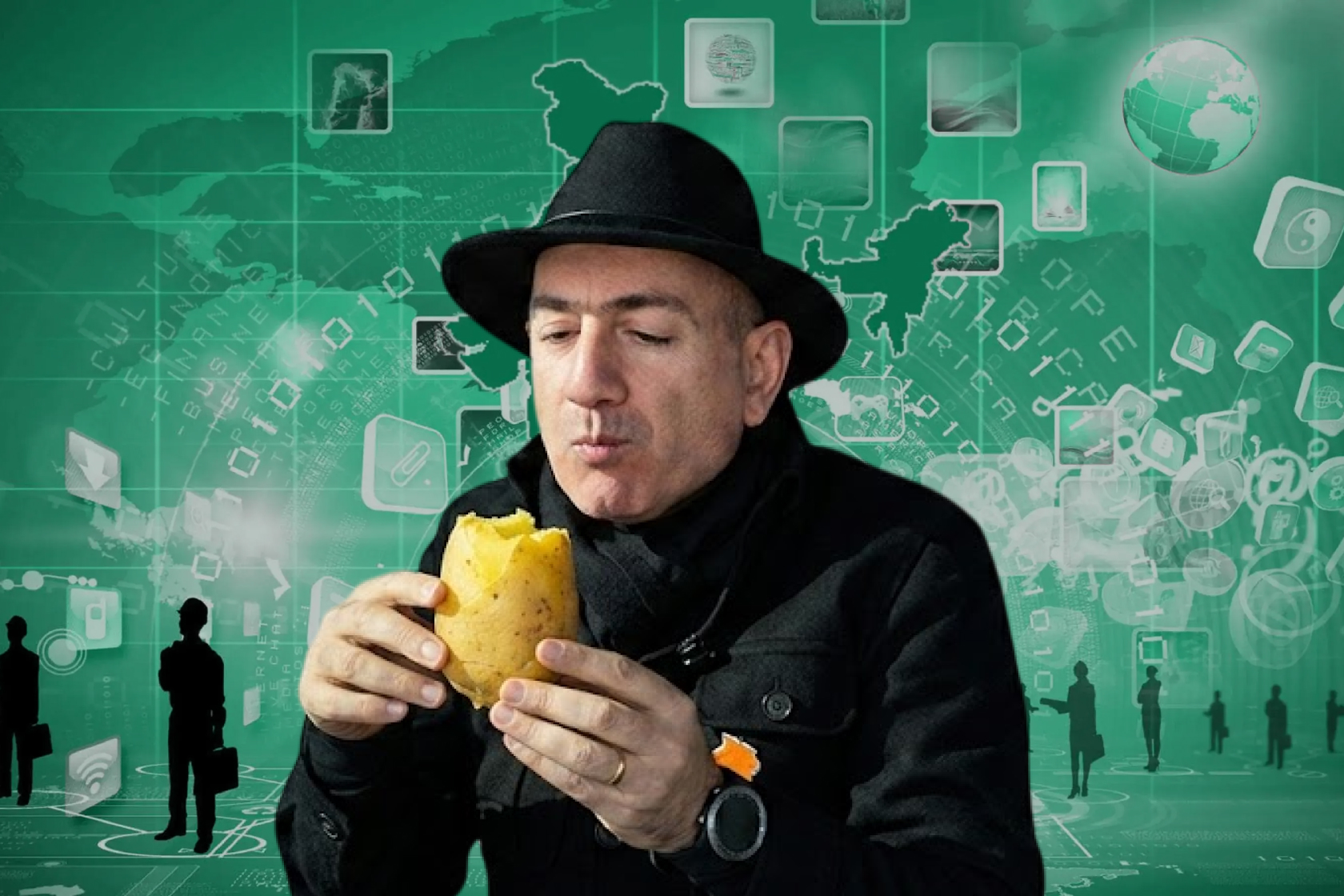
The social networks of Armenian Prime Minister Nikol Pashinyan are one of the most interesting cases of modern political communication in the post-Soviet space. While most of the region's leaders continue to speak the language of television officialdom, Pashinyan has actually built an image of a political influencer. And one of the most unusual elements of this strategy is that the Prime Minister is constantly eating something in the frame.
Mukbang, Pashinyan Style
In fact, the Armenian prime minister adapted elements of mukbang culture, a popular Asian Internet genre in which a person eats in front of the camera, communicates with the audience and creates the effect of emotional intimacy. Of course, Pashinyan does not do mukbang in the classic Korean format with an emphasis on huge portions of food and ASMR effects. But the mechanism is very similar – the author reduces the distance to the level of a joint meal with the audience, just like an ordinary and even very close person.
Eating on social media is one of the most effective engagement triggers. Platform algorithms love everyday content, close-ups, simple human actions, a sense of everyday life and emotional comfort. Food content has historically shown high engagement on almost all platforms. Even if a person is not interested in politics, they may linger on the video simply because they are curious to see what the Prime minister eats, how he talks or how he behaves outside of official events.
In addition, food creates a sense of sincerity. In a classic political speech, everything is controlled: gestures, intonation, background, clothes, light. But when a person eats, laughs, reacts to the taste, or talks in an informal manner, the audience perceives what is happening as less staged.
One of Us
In the case of Pashinyan, there is another important aspect — anti-elitism. From the very beginning, his political brand was based on the image of a man from the people, not a representative of the old elite. The simple food, the street atmosphere, the lack of exaggerated luxury and the demonstrative naturalness of everyday life are a natural continuation of this strategy, which carries the message "I live the same way as you."
It is also interesting that such communication works not only for the domestic audience of Armenia. Pashinyan regularly becomes a viral character in the international segment of TikTok and Instagram precisely because his behavior is out of the usual archetype of a post-Soviet leader. For social media users, the prime minister, who records food videos, shows hearts with his hands and behaves like a lifestyle blogger, looks unusual and therefore automatically attracts attention. In the list of Pashinyan's subscribers, everyone can find their own friends and acquaintances, check it out.
It's brave, but there are risks
However, this approach to communication also has serious risks. The more a politician transforms into a digital persona, the higher the dependence on personal charisma and emotional contact with the audience. In addition, such an image can irritate a part of society, especially a more conservative audience, which expects the head of state to be emphatically serious. For Pashinyan's critics, this style looks like an infantilization of politics and an attempt to replace a meaningful agenda with something frivolous and manipulative.
Nevertheless, Pashinyan's case shows an important trend: modern political communication is increasingly moving towards an influencer culture, and social media support speaks for itself. After all, hardly anyone watches the broadcast of the official protocols to the end.
Mukbang, Pashinyan Style
In fact, the Armenian prime minister adapted elements of mukbang culture, a popular Asian Internet genre in which a person eats in front of the camera, communicates with the audience and creates the effect of emotional intimacy. Of course, Pashinyan does not do mukbang in the classic Korean format with an emphasis on huge portions of food and ASMR effects. But the mechanism is very similar – the author reduces the distance to the level of a joint meal with the audience, just like an ordinary and even very close person.
Eating on social media is one of the most effective engagement triggers. Platform algorithms love everyday content, close-ups, simple human actions, a sense of everyday life and emotional comfort. Food content has historically shown high engagement on almost all platforms. Even if a person is not interested in politics, they may linger on the video simply because they are curious to see what the Prime minister eats, how he talks or how he behaves outside of official events.
In addition, food creates a sense of sincerity. In a classic political speech, everything is controlled: gestures, intonation, background, clothes, light. But when a person eats, laughs, reacts to the taste, or talks in an informal manner, the audience perceives what is happening as less staged.
One of Us
In the case of Pashinyan, there is another important aspect — anti-elitism. From the very beginning, his political brand was based on the image of a man from the people, not a representative of the old elite. The simple food, the street atmosphere, the lack of exaggerated luxury and the demonstrative naturalness of everyday life are a natural continuation of this strategy, which carries the message "I live the same way as you."
It is also interesting that such communication works not only for the domestic audience of Armenia. Pashinyan regularly becomes a viral character in the international segment of TikTok and Instagram precisely because his behavior is out of the usual archetype of a post-Soviet leader. For social media users, the prime minister, who records food videos, shows hearts with his hands and behaves like a lifestyle blogger, looks unusual and therefore automatically attracts attention. In the list of Pashinyan's subscribers, everyone can find their own friends and acquaintances, check it out.
It's brave, but there are risks
However, this approach to communication also has serious risks. The more a politician transforms into a digital persona, the higher the dependence on personal charisma and emotional contact with the audience. In addition, such an image can irritate a part of society, especially a more conservative audience, which expects the head of state to be emphatically serious. For Pashinyan's critics, this style looks like an infantilization of politics and an attempt to replace a meaningful agenda with something frivolous and manipulative.
Nevertheless, Pashinyan's case shows an important trend: modern political communication is increasingly moving towards an influencer culture, and social media support speaks for itself. After all, hardly anyone watches the broadcast of the official protocols to the end.