Issues of national identity are the most sensitive in Kazakhstani society. Everything related to language, traditions, and cultural symbols passes through an invisible sieve in the minds of citizens, on the surface of which there is often a context that seems offensive to some and completely harmless to another part of society. The polarization of perception is now a familiar reality for us, in which it is worth evaluating every word, otherwise the reputational crisis will hit so hard that it will not seem enough.
Did journalist Askhat Niyazov want to insult his people by making fun of one of the participants in the Zamandas youth show, saying that he was "so Kazakh that he even had a taqiya hanging on his penis"? Probably not. There was an improvisation, a genre game, an attempt to fit into the "Roast" format. In his public apology, Askhat says this: "It was a joke, it was a show, and everyone was joking there. We didn't mean to offend anyone, so I want to apologize to those who were hurt." However, intent does not save you from the consequences.
Askhat Niyazov's joke didn't go down well, not because Kazakhstanis have become hypocrites or don't know how to laugh, and certainly not because society has no sense of humor. The reason is deeper: it lies at the intersection of culture, language, and the role played by the author of the joke himself.
Symbols and roles
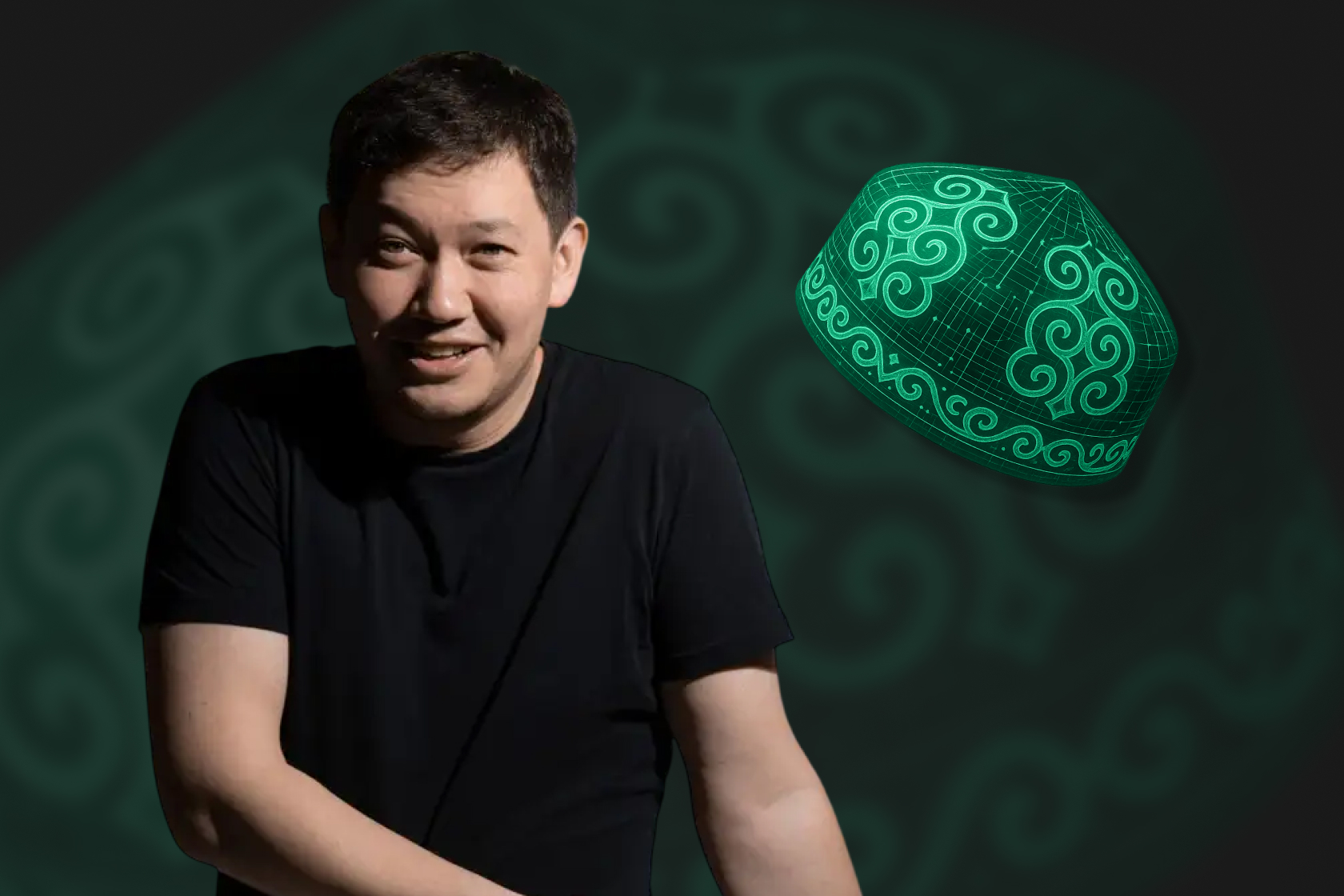
Taqiya symbolizes dignity, age and respect in Kazakh culture. It is given to a boy during the transition to adulthood. Taqiya is an indispensable element of an aksakal's wardrobe in any Kazakh home, which is associated with respect and dignity. Therefore, the joke mentioning such a thing in a sexual context did not seem funny to everyone and was perceived as devaluing a symbol of national identity, albeit not a state one, but significant at the level of collective memory.
The language aspect stands alone. One of the social media commentators accurately noted: "If Askhat had made his joke in Kazakh, everyone would have laughed." Such "salty" jokes sometimes occur among Kazakh-speaking Kazakhs. They are organic and they are considered as their own, "in the circle of friends". But in Russian, the same phrase sounds like ridicule from the outside, from the position of "above", especially if we take into account the "unspoken" collective traumas of the Kazakhs associated with colonization.
The negative perception of Askhat's joke also increased the effect of dissonance with his professional role. When a journalist who constantly exposes facts of injustice and corruption utters a phrase with vulgar overtones, he violates the unwritten rules of a public role. A journalist is expected to be responsible and respected, even when he is off the air. What a stand-up comedian can afford becomes unacceptable if the same thing is said by a person who embodies a profession associated with public trust.
"Why are Kazakhs so sensitive?"
For decades, Kazakh society has lived in a situation where its language, symbols, and cultural meanings were considered secondary. Now the opposite is happening: the return of respect for oneself, to one's roots, to what has been cruelly displaced for a long time as a result of colonization. Therefore, hypersensitivity is not a manifestation of weakness or aggression, it is a natural stage of identity restoration. This process became most noticeable after the outbreak of the war in Ukraine. It is reinforced by the continuing problems of social inequality.
Now people are no longer indifferent to how people talk about them, what words describe their culture, who jokes and with what intonation. Society lives in a state of delicate balance between the desire to be open to the world and the desire to maintain respect for its cultural meanings. At this point, any careless word that touches national symbols instantly hits a nerve, because people feel the fragility of their cultural boundaries, which causes a natural desire to protect them. It is absolutely wrong and dangerous not to try to understand this aspect, ignore it, devalue it, or even worse, ridicule it.
Let's see if Askhat Niyazov's apologies will ease the tension, where he explains that he "didn't want to offend anyone." In a reputational crisis, "I didn't want to" almost always sounds like an excuse. His message would have been much more convincing with an emphasis on understanding why society took the phrase painfully. Anyway, for everyone who is burdened with publicity, this case showed how much the media environment in Kazakhstan has changed, how important it is to feel these changes and take them into account in their communications.
Anar Bekbassova
Did journalist Askhat Niyazov want to insult his people by making fun of one of the participants in the Zamandas youth show, saying that he was "so Kazakh that he even had a taqiya hanging on his penis"? Probably not. There was an improvisation, a genre game, an attempt to fit into the "Roast" format. In his public apology, Askhat says this: "It was a joke, it was a show, and everyone was joking there. We didn't mean to offend anyone, so I want to apologize to those who were hurt." However, intent does not save you from the consequences.
Askhat Niyazov's joke didn't go down well, not because Kazakhstanis have become hypocrites or don't know how to laugh, and certainly not because society has no sense of humor. The reason is deeper: it lies at the intersection of culture, language, and the role played by the author of the joke himself.
Symbols and roles
Taqiya symbolizes dignity, age and respect in Kazakh culture. It is given to a boy during the transition to adulthood. Taqiya is an indispensable element of an aksakal's wardrobe in any Kazakh home, which is associated with respect and dignity. Therefore, the joke mentioning such a thing in a sexual context did not seem funny to everyone and was perceived as devaluing a symbol of national identity, albeit not a state one, but significant at the level of collective memory.
The language aspect stands alone. One of the social media commentators accurately noted: "If Askhat had made his joke in Kazakh, everyone would have laughed." Such "salty" jokes sometimes occur among Kazakh-speaking Kazakhs. They are organic and they are considered as their own, "in the circle of friends". But in Russian, the same phrase sounds like ridicule from the outside, from the position of "above", especially if we take into account the "unspoken" collective traumas of the Kazakhs associated with colonization.
The negative perception of Askhat's joke also increased the effect of dissonance with his professional role. When a journalist who constantly exposes facts of injustice and corruption utters a phrase with vulgar overtones, he violates the unwritten rules of a public role. A journalist is expected to be responsible and respected, even when he is off the air. What a stand-up comedian can afford becomes unacceptable if the same thing is said by a person who embodies a profession associated with public trust.
"Why are Kazakhs so sensitive?"
For decades, Kazakh society has lived in a situation where its language, symbols, and cultural meanings were considered secondary. Now the opposite is happening: the return of respect for oneself, to one's roots, to what has been cruelly displaced for a long time as a result of colonization. Therefore, hypersensitivity is not a manifestation of weakness or aggression, it is a natural stage of identity restoration. This process became most noticeable after the outbreak of the war in Ukraine. It is reinforced by the continuing problems of social inequality.
Now people are no longer indifferent to how people talk about them, what words describe their culture, who jokes and with what intonation. Society lives in a state of delicate balance between the desire to be open to the world and the desire to maintain respect for its cultural meanings. At this point, any careless word that touches national symbols instantly hits a nerve, because people feel the fragility of their cultural boundaries, which causes a natural desire to protect them. It is absolutely wrong and dangerous not to try to understand this aspect, ignore it, devalue it, or even worse, ridicule it.
Let's see if Askhat Niyazov's apologies will ease the tension, where he explains that he "didn't want to offend anyone." In a reputational crisis, "I didn't want to" almost always sounds like an excuse. His message would have been much more convincing with an emphasis on understanding why society took the phrase painfully. Anyway, for everyone who is burdened with publicity, this case showed how much the media environment in Kazakhstan has changed, how important it is to feel these changes and take them into account in their communications.
Anar Bekbassova